วันจันทร์ที่ 11 กุมภาพันธ์ พ.ศ. 2556

dead sea , middle east
The Dead Sea is shrinking due to water management in the hot, dry countries that surround it. It may even disappear in as few as 50 years so this is a must-see with a deadline. Entering the extremely salty waters (eight times saltier than the sea) is an experience in itself - firstly because it is velvety-soft, secondly because any tiny little cut will sting like heck and thirdly because all pain disappears in the wonderment of being weightless in water. It's not just the fun of super-buoyancy that makes the Dead Sea worth a visit though. Smother your body in Dead Sea mud, and the green goo is said to take 10 years off you. You can also say you've been to the lowest place on earth as the shore is 420m below sea level.
Palace of Versailles

The pinnacle of absolute monarchy and the indulgence of the ancien régime in France, Louis XIV transformed this former hunting lodge into one of the most expansive palaces in the world. So indulgent was it, in fact, that Louis had all records of how much it originally cost to build destroyed, though the estimates range from $2 billion up to almost $300 billion in today's dollars.
Sistine Chapel

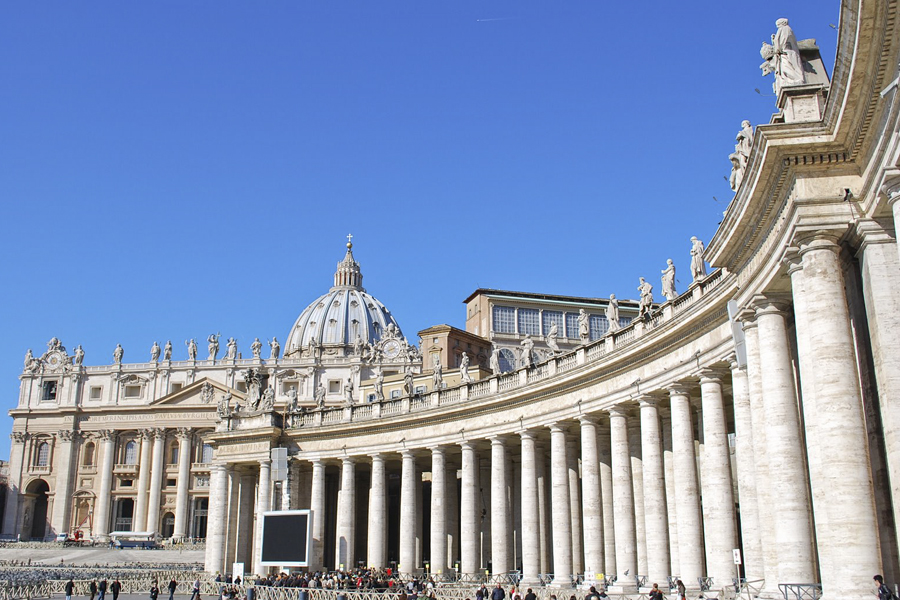
Honestly, with some of the most prominent works by some of the most famous Renaissance artists--like Michelangelo, Sandro Botticelli, and Pietro Perugino--how could you not want to take a quick look at the Sistine Chapel? I mean, it's in Vatican City, which is pretty worth checking out on its own.

Petra

Built around 1200BC, Petra is an ancient city of Jordan, renowned not just for the fact that it's entirely built inside "towering rocks," but for its intricacies therein. The city was able to constructed in the desert because its designers, the Nabataeans, redirected waterways, creating an artificial oasis--the center of their caravan trade, and a fortress.

วันเสาร์ที่ 2 กุมภาพันธ์ พ.ศ. 2556

วันพฤหัสบดีที่ 31 มกราคม พ.ศ. 2556


วันพุธที่ 5 กันยายน พ.ศ. 2555
Check this out!
Once,I have been to China,Italy and France . It was very amazing and i very like it especially Italy, the country was really fantastic . Their building,road,shop,sculpture etc. are really classic ,I don't know how to explain it you should see it with your eyes . If i have time i will upload some shot from there . :)
Once,I have been to China,Italy and France . It was very amazing and i very like it especially Italy, the country was really fantastic . Their building,road,shop,sculpture etc. are really classic ,I don't know how to explain it you should see it with your eyes . If i have time i will upload some shot from there . :)




KRABI
If your idea of paradise is a pristine, tranquil tropical island with swaying coconut trees, pure white beaches and brilliant turquoise lagoons, then Krabi will not disappoint you.

"The Sun, Sea and Sand" this would be what you will always see when you are in Krabi. Lot's of sunshine, crystal clear blue sea, soft powder white sandy beaches...need I say more?
We swam, snorkeled, sun tanned in the perfect krabi beaches, kayaking deep into the canyons...remote islands that time forgot.It's amazing that there are so many activities that you want to do that you will wish you could stay there just for a bit longer.
Gaze at the Aurora Borealis

Never mind the grizzly bears, the glaciers and the tundra. The best reason to go north (to Alaska, the Yukon or anywhere else above about 60 degrees latitude) is to see the Northern Lights.
Try to imagine the most colorful, textured sunset you've ever seen, then send it swirling and pulsing across an otherwise clear and starry sky. Maybe add some faint outlines of mountains on the horizon and a hooting gray owl for ambience.
But even more fabulous, in its own way, is the physics. Your planet is being buffeted by solar wind—particles of protons and electrons that the sun spews into space. Some of the charged particles get sucked into the earth's magnetic field and flow toward the pole until they collide with our atmosphere. Then, voilà: the aurora borealis (or aurora australis, if you happen to be at the bottom of the Southern Hemisphere).
The best times to see the aurora are around the fall and spring equinoxes, according to Janet Green, a physicist at the National Oceanic and Atmospheric Administration (NOAA), when geomagnetic storms—disturbances in the earth's magnetic field—are strongest. It helps if the sun is near a peak of activity in its 11-year sunspot cycle. You can sign up for aurora alerts online or keep an eye on NOAA's geomagnetic storm forecast. But most of all you need a cloudless night, a flask of something warm and bracing, and pepper spray in case a grizzly tries to join you for the show.
The Tranquil Zen Garden of Kyoto

Zen rock gardens, or karesansui (translated as "dry-mountain-water"), originated in medieval Japan and are renowned for their simplicity and serenity. The most famous of these can be found in Kyoto at the 15th-century Ryoan-ji, the Temple of the Peaceful Dragon. "While there are other similar gardens of great beauty," says James Ulak, curator of Japanese art at Smithsonian's Freer and Sackler galleries, "Ryoan-ji remains the ur-site of the type—powerful, abstract, Zen Buddhist landscapes designed to invoke deep meditation."
Measuring 98 by 32 feet, the Ryoan-ji garden is about the size of a tennis court and is composed solel of 15 large and small rocks, some encircled by moss, grouped in five clusters on a bed of carefully raked white sand. From a distance, the rocks resemble islands, the sand a tranquil sea.
In 2002, a research team at Kyoto University claimed to have cracked the Zen code. Relying on computer models, they found that the garden's rocks—when viewed from the proper angle—subconsciously evoke the tranquil outline of a branching tree. Over the centuries, however, visitors have discerned images as diverse as a tigress escorting her cubs across water and the Chinese character for "heart" or "mind." Since the anonymous designer left no explanation, the garden's exact meaning remains a mystery, which no doubt contributes to its enduring allure.
The Louvre’s Priceless Masterpieces
 The Mona Lisa. The Venus de Milo. The Winged Victory of Samothrace. The collection in the Louvre Museum in Paris is an Art History 101 checklist. And yes, you must see the works in person. No photograph or Web site has the same impact as standing dwarfed before the myriad intricacies of Renaissance painter Paolo Veronese's 22-foot-tall Wedding Feast at Cana. But a pick-and-choose tour of famous masterpieces ignores the full scope of the collection. Begun by King François I in 1546, the 35,000 pieces are a narrative of artistic vision from antiquity through the mid-19th century.
The Louvre is the granddaddy of public art museums. In 1793 the medieval fortress-turned-royal palace was opened to all the people by order of the French Revolutionary government. Fostered later by Napoleon, who understood the propaganda value of a collection of world masterpieces, it was also a center for the education of artists. "The Louvre was the inspiration for other art museums," says Andrew McClellan, author of Inventing the Louvre and a professor of art history and museum studies at Tufts University. "It is the quintessential example of the museum idea: that you can go into one place and confront the surviving products of distant cultures and the finest things that have ever been made."
Restoring the Taj Mahal
This year, millions of tourists will visit the marble monument—and the Indian government is restoring it for millions more
- By Kathleen Burke
- Smithsonian magazine, January 2008, Subscribe

Every year for the past decade or so, more than three million travelers have visited India's Taj Mahal. The white marble monument—completed over some 15 years by the emperor Shah Jahan as a memorial to his wife, Mumtaz Mahal, who died in childbirth in 1631—rises on a three-acre site on the Yamuna River in the northern city of Agra.
By the mid-1990s, the Taj's splendors—such as the 187-foot, minaret-flanked dome, fronted by a reflecting pool and surrounded by a walled garden—had deteriorated markedly, prompting a multimillion-dollar restoration effort spearheaded by the Indian government. The massive undertaking includes scrubbing the marble exterior and a restoration of the massive red sandstone main gates, including the replacement of semiprecious inlay.
The restoration is expected to take several years. Even before the scaffolding comes down, however, visitors will discover that the monument's aura of serenity—long associated with this symbol of romantic love—remains intact. Today, access to the site is regulated by the use of timed tickets; visitors stroll among the gardens and gleaming interior spaces in an atmosphere closer to the tranquillity envisioned by Shah Jahan himself. This significant preservation project, says Bonnie Burnham, president of the World Monuments Fund, demonstrates the progress that can be achieved by "public-private partnerships." Long-term plans, she adds, include a re-creation of the site's original gardens.
สมัครสมาชิก:
บทความ (Atom)